Blog
Can You Wear Makeup In a Tanning Bed? – Beautiful With Brains


Last Updated on May 24, 2026 by Giorgia Guazzarotti
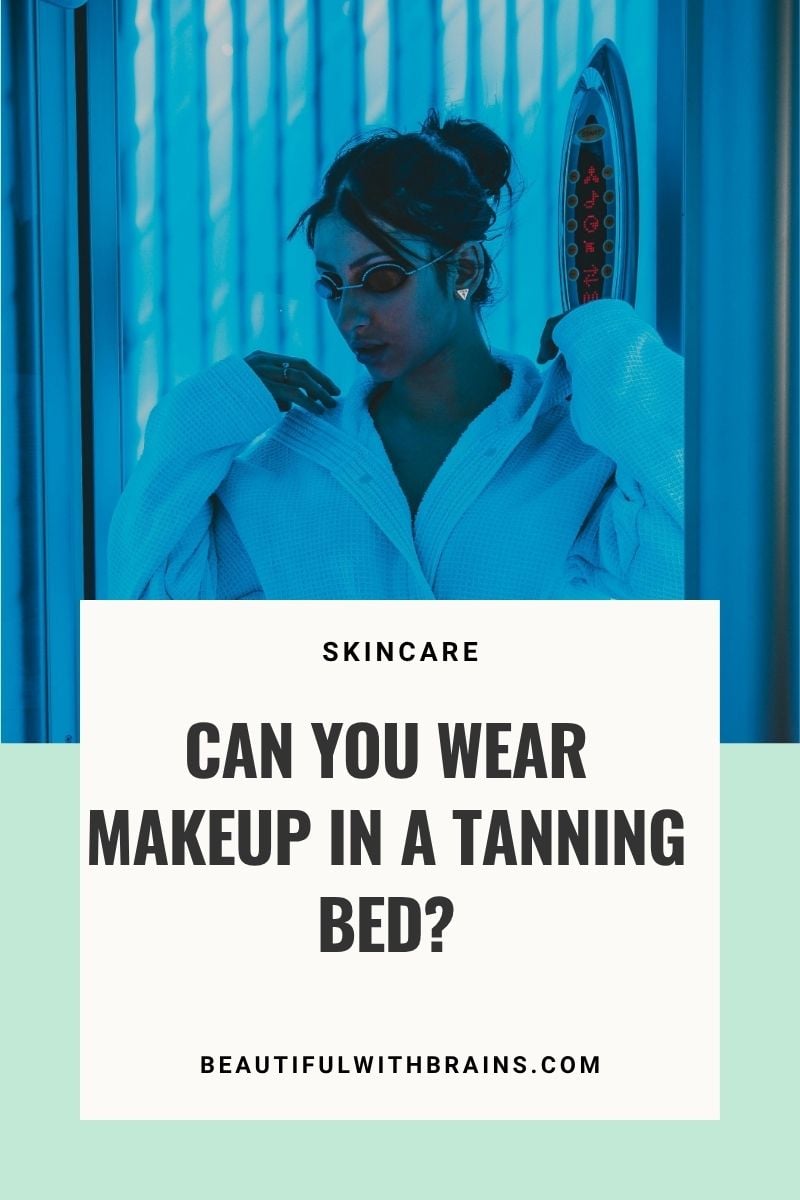
Can you wear makeup in a tanning bed? The sunbed session is booked, skin is finally going to get some colour, and the only problem is going straight from work or a night out with absolutely no chance of showing up bare-faced. So when people say you shouldn’t wear makeup in a tanning bed with zero explanation, you’re like, “is this a real risk or is everyone making a fuss about nothing?” This article covers exactly what happens to skin and makeup under UV light, so you can finally get your answer once and for all and get the best results for your skin.
What Actually Happens When Makeup Meets A Tanning Bed
A tanning bed is not the same as sitting outside with a glass of something cold in your hand. It’s hot, it’s enclosed, and the UV light in there is concentrated in a way that natural sunlight isn’t. So when you get in with a full face of foundation and concealer and powder and whatever else, a few things start happening at once and none of them are particularly fun. The most obvious one is that your makeup blocks the UV rays from reaching your skin evenly. Foundation doesn’t go on in a perfectly uniform layer (nobody’s does), so some bits of your face get more UV exposure than others, and your skin tans accordingly. The result is patchy, uneven colour that looks a bit like you fell asleep with a mask on. Think of it exactly like tan lines from clothing, just happening on your face instead. Not the flawless glow anyone was going for. Hardly the tanning results you were looking for, right?
Does It Increase The Risk Of Breakouts?
When you’re in a tanning bed, your skin heats up, you get sweaty, and your oil production goes up a bit. That can make your face feel greasier and a bit more “clogged” than usual, and it’s something that happens across skin types, not just people who already have an oily skin type. And when you’ve got a layer of cosmetic products sitting on top of all of that, the heat literally pushes them into your pores. You’re essentially baking your makeup into your skin for however long your session lasts. Add UV exposure and irritation from the tanning bed itself, and yeah, it’s pretty easy to see why you might break out a few days later. So now you may have a base tan, but it’s hardly the healthy glow you wanted, right?
Can You Wear Makeup With SPF In A Tanning Bed?
I know what you’re going to say next, “But My Foundation Has SPF! Surely, I need to wear SPF when I use indoor tanning beds to avoid the risk of skin cancer right?” Well, frankly, you shouldn’t use tanning beds at all because they do cause skin cancer – and even the perfect tan isn’t worth dying for. But if you’re going to do it anyway, then yes you should wear a broad-spectrum sunscreen, not a foundation with SPF.
The uncomfortable truth about SPF in makeup? It sounds reassuring on the label, but in real-world use it’s doing a lot less than you think. The SPF number on a BB cream or foundation is tested in lab conditions with a very specific, quite generous amount of product applied. Nobody actually applies that much makeup. In normal use, the actual SPF delivered by makeup products is dramatically lower than stated because people apply a fraction of what’s needed to hit that number.
And here’s the specific problem with SPF makeup in a tanning bed: you went there to get UV exposure to your skin. The SPF is partially blocking that (unevenly, because your application isn’t uniform) and you end up with a face that’s both lighter than the rest of your body and patchy. The more we look at it, the more this sounds like a bad idea, right?
Related: Do Cosmetics With SPF Provide Adequate Sun Protection?
What Should You Actually Do?
- Take your makeup off. Bring micellar water and some cotton pads, or a couple of cleansing wipes, and do it in the salon before you get in. Five minutes. Most tanning studios have mirrors in the changing rooms precisely for this. It’s not a big elaborate skincare routine . It’s just removing the thing that’s going to mess up your results and potentially cause skin irritation under sun exposure.
- If you’re using any active ingredients in your skincare (retinol, acids, vitamin C) it’s worth knowing that those raise your skin sensitivity and make it more prone to sun damage for a while after use too, so mention it to a tanning consultant if you’re not sure where you stand, especially if you’re going for the first time.
- Protect your eyes with proper protective eyewear every single session. UVA rays and UVB rays both cause eye damage over time. Use an SPF lip balm if you want to protect your lips while you’re in there.
- After your session, give your skin 20 minutes or so to cool down before putting makeup back on. Your skin is still warm, and piling product on immediately is just recreating the problem you were trying to avoid.
- Use a fake tan instead. It’s the safer alternative anyway and it doesn’t put you at risk of the most dangerous type of skin cancer. Plus, these days, you can find many that give you that tanned look without causing premature aging of the skin, like sun beds do. Just saying.
The Bottom Line
Wearing makeup in a tanning bed causes two problems at once: a patchy tan because the makeup blocks UV unevenly and breakouts because the heat drives everything into your pores. None of these are worth it. Not to talk about the risk of basal cell carcinoma you get from a tanning both anyway. Take the makeup off, get in, get your colour, and put it back on after. That’s genuinely the best way to get the most out of your indoor tanning session without doing unnecessary damage to your skin in the process. Or you can do the sensible thing and use a tanning lotion instead. It’s the safest way to get a longer-lasting tan without the risk of melanoma or other skin damage, like fine lines and wrinkles.