Blog
Foundation Stick vs Liquid vs Powder: Key Differences Explained


Choosing between a foundation stick, a liquid, or a powder comes down to your skin type, finish preference, and daily lifestyle. In short: sticks are cream formulas that swipe on quickly with buildable, targeted coverage; liquids offer the widest range of finishes and coverage levels; powders deliver lightweight, shine-controlling wear that’s hard to beat in heat and humidity. Pressed powders are compact and great for travel and quick touch-ups, while loose powders offer ultra-blendable, featherlight coverage at home. If you’re comparing foundation stick vs. liquid for everyday use, liquids are the most adaptable, while sticks excel for quick routines and travel. For stick vs. powder foundation, powders win for oil control and a soft-matte feel, while sticks provide creamier coverage. Below, a clean, mineral-first perspective on when each format shines—and how to achieve the most natural, seamless result.
What Is Stick Foundation
A stick foundation is a cream base housed in a twist-up bullet designed for direct application to the skin. You can draw it on like a concealer—then blend with fingers, a brush, or a sponge—for customizable light buildable coverage that’s easy to build. Because it’s solid and spill-proof, it’s exceptionally travel-friendly and ideal for on-the-go touch-ups—think of a foundation stick like our Complexion Rescue Hydrating Foundation Stick for quick, targeted coverage with fewer tools.
Pros
- Tool-optional, fast application
- Portable, mess-free, TSA-friendly
- Buildable coverage; doubles as a spot concealer
Cons
- Doesn’t build to the same coverage as many liquid foundations.
What Is Liquid Foundation
Liquid foundation is a fluid makeup base—from sheer, serum-like tints to rich, full-coverage creams—offering the broadest range of finishes and coverage for different skin needs. Liquids often include skincare benefits (think hydrating hyaluronic acid or calming mineral pigments), making them especially comfortable on dry or mature skin. As a format, liquid foundation offers versatility from light, natural coverage to buildable full coverage, with finishes from dewy to matte—ranging from sheer, gel-cream tints like COMPLEXION RESCUE® Tinted Moisturizer with Hyaluronic Acid and Mineral SPF 30 to classic mineral liquids like BAREPRO® 24HR Wear Skin-Perfecting Matte Liquid Foundation Mineral SPF 20.
Common finishes and coverage at a glance:
- Dewy: sheer–medium
- Satin/natural: light–full (buildable)
- Matte/soft-matte: medium–full (often long-wear)
What Is Powder Foundation
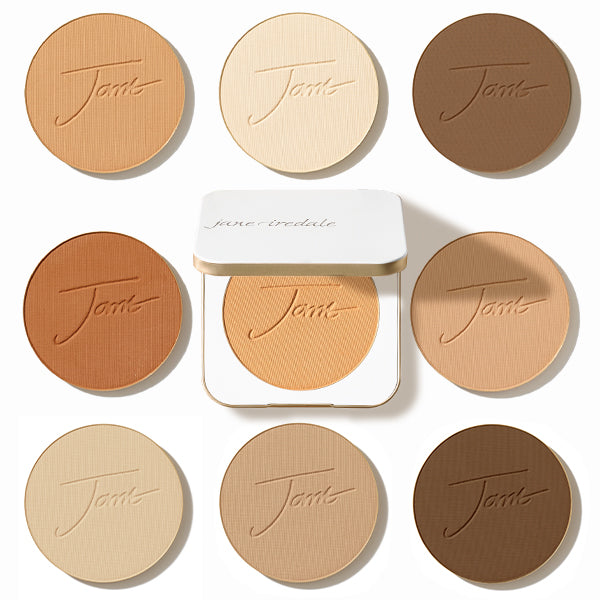
Powder foundation comes as pressed or loose pigments/minerals for a lightweight, luminous or matte effect that naturally absorbs oil. It’s quick to apply, excels at midday touch-ups, and typically feels featherlight on the skin. Our mineral-first heritage is built on powders like Original Loose Powder Foundation, a lightweight blend of clean minerals. Powders typically offer the longest matte wear and best shine control, making them favorite picks for oily and combination skin, especially in warm weather.
Pressed vs. loose powder at a glance:
- Pressed: Solid compact that’s the least messy and most travel-friendly; ideal for quick, on-the-go shine control and touch-ups with a brush or puff.
- Loose: Free minerals in a sifter jar for ultra-blendable, featherlight coverage; great for at-home application and achieving an airbrushed finish with precise layering.
Pros
- Excellent oil control and fast touch-ups
- Lightweight, non-greasy feel; often non-comedogenic
- Soft-matte finish that resists shine
Cons
- Can cling to dry patches or emphasize flakes
- Less radiance
- Brush or sponge required for best results
Coverage Comparison of Stick, Liquid, and Powder Foundations
Here’s the foundation stick comparison you asked for—side by side with liquid and powder for clarity.
Coverage scale:
- Stick: light buildable; also great for targeted concealing and quick spot-correction.
- Liquid: sheer/light to full; most buildable and flexible for “your-skin-but-better” to flawless.
- Powder: light buildable to full; ideal for soft-matte correction with minimal feel.
When to pick one over another:
- If you want to replace liquid for convenience, a stick can deliver comparable coverage in fewer steps—especially for normal-to-dry skin.
- If you’re weighing foundation stick vs. liquid for redness or uneven tone, liquids help dial coverage up or down across the face, while sticks excel at strategic, higher-coverage placement.
- For stick vs. powder foundation on oily skin, powder will control shine longer.
Finish Types and Texture Differences
Think about how you want your skin to look and feel by day’s end.
- Stick: Typically satin or natural—skin-like with a creamy, balm-like glide; sets without losing freshness when blended well (and with a light set where needed). Good for normal to combination skin; prep drier areas with moisturizer.
- Liquid: Comes in radiant/dewy, satin/natural, and matte options. Hydrating formulas cushion dry or mature skin; matte formulas resist shine on oily skin.
- Powder: Classic matte or luminous with minimal glow; ultra-light texture that blurs and controls oil. Best for oily/combination skin or anyone who prefers a non-greasy feel.
Suitability for Different Skin Types
Match the format to your skin’s needs.
- Oily or acne-prone: Powder foundation typically performs best for oil control and lightweight wear; non-comedogenic liquids or certain sticks can work with oil-controlling skincare and thorough evening cleansing.
- Dry or mature: Hydrating liquid formulas or new bareMinerals Complexion Rescue Luminous Skin Tint Stick helps prevent settling into fine lines.
- Sensitive: Mineral-based powders and gentle, fragrance-free liquids are often well tolerated.
Non-comedogenic means a product is formulated not to clog pores—useful for those prone to breakouts. For tailored advice, see our skin-type foundation guide our skin-type foundation guide.
Application Differences and Techniques
- Stick: Swipe across the center of the face (forehead, nose, chin, cheeks), then blend outward with fingers for speed or the Smoothing Face Brush. Work in thin layers.
- Liquid: Start with a small amount, then blend with a foundation brush for even, streak-free coverage. Add where needed; sheer the perimeter for a seamless fade.
- Powder: Use a dense brush or sponge for pressed compacts or a fluffy buffing brush for loose minerals, then buff in small, circular motions for an even veil. For quick touch-ups, a compact puff works well with pressed powder. For a loose mineral technique that prevents caking, try our Swirl, Tap, Buff method our Swirl, Tap, Buff method.
Pro layering tip: Apply a thin liquid base, set the T-zone with powder for longevity, then use a stick for pinpoint concealing. This keeps skin fresh without heavy buildup.
Longevity and Wear Time Comparison
Typical wear, assuming proper prep and setting as needed:
- Powder: Often leads for longevity on oily/combination skin and in humidity, thanks to superior oil absorption and a soft-matte set. Some bareMinerals powder foundations wear for up to 24 hours.
- Liquid: Wear time varies; matte, long-wear formulas tend to outlast dewy ones on oily skin, while hydrating liquids keep dry skin comfortable longer. Some bareMinerals liquid foundations wear for up to 24 hours.
- Stick: Generally provides solid, medium-long wear that improves when lightly set with powder in areas that crease or get shiny. Quick touch-ups are simple and portable. BareMinerals foundation stick has 24 hour wear.
Travel and Portability Advantages
- Stick: Best-in-class for travel—solid, no-spill, and tool-optional, making it easy to apply in a car, plane, or gym locker room.
- Powder: Pressed compacts are the most travel-friendly and least messy for shine control and touch-ups; loose powders offer the same performance but require a brush and extra care to avoid spillage.
- Liquid: Great performance but can leak; must comply with airline liquid limits. You can decant into a travel tube and store upright.
Best for travel verdict:
- Packability: Stick
- Fast touch-ups: Powder (pressed) (for shine), Stick (for coverage)
- Least mess: Stick
- Most versatile finish control: Liquid (if you don’t mind the liquids bag)
When to Use Stick, Liquid, and Powder Foundations
- Choose a stick when you need speedy, targeted coverage, a gym-bag or carry-on option, or a foundation-concealer hybrid for spot-correcting.
- Choose a liquid for customizable coverage, event-ready polish, or hydrating comfort—especially on dry or mature skin.
- Choose a powder for all-day oil control, soft-matte wear, and featherlight feel with the quickest shine touch-ups.
Hybrid routine:
-
Liquid base for flexibility, powder to set strategic areas for staying power, and a stick for on-the-go corrections. For a mineral-first approach, see our loose powder foundation explainer our loose powder foundation explainer.
Frequently Asked Questions
What foundation type is best for oily or acne-prone skin?
Powder foundation is typically best for oily or acne-prone skin due to its oil-absorbing, lightweight feel. Non-comedogenic liquids and select stick formulas can also work well with proper cleansing at night.
Can foundation sticks replace liquid foundation in a daily routine?
Yes—if you want quick, targeted application and portability. Sticks offer buildable coverage comparable to many liquids; just blend well and set where needed.
How do I choose the right finish for my skin type?
Dry or mature skin tends to prefer hydrating or dewy finishes; oily or combination skin benefits from matte or satin. Normal or balanced skin can wear any finish based on preference.
Which foundation lasts longer in heat and humidity?
Powder foundations generally last longest in heat and humidity; long-wear matte liquids can also perform well, while sticks may need a midday touch-up.
What is the best way to combine different foundation types for a flawless look?
Use a thin liquid base, set oily areas with powder, and spot-correct with a stick for coverage only where needed. This keeps skin fresh without heaviness.